
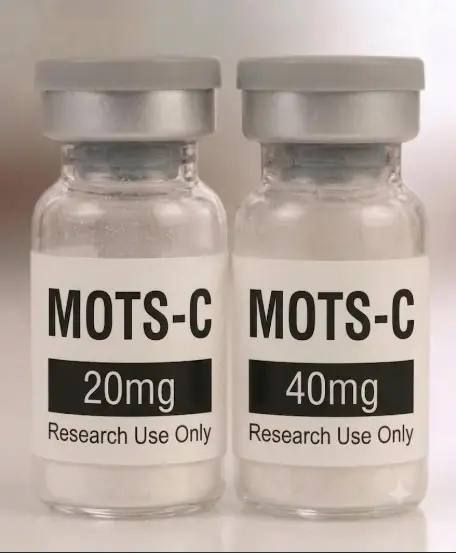
Description
Product Overview: MOTS-c (Mitochondrial ORF of the 12S rRNA Type-C)
MOTS-c is a 16-amino acid mitochondrial-derived peptide (MDP) encoded within the mitochondrial 12S ribosomal RNA gene. Acting as a signaling molecule that communicates mitochondrial metabolic status directly to the nucleus, MOTS-c translocates to the cell nucleus during metabolic stress to regulate nuclear gene expression. It functions primarily by activating AMP-activated protein kinase (AMPK) and modulating the folate-methionine cycle, making it a critical research subject for insulin sensitivity, metabolic homeostasis, exercise mimetic pathways, and cellular longevity.
Primary Research Applications & Reasons for Study
- AMPK Activation & Glucose Homeostasis: Stimulating AMP-activated protein kinase to drive GLUT4 translocation, enhancing non-insulin-dependent glucose uptake in skeletal muscle models.
- Folate-Methionine Cycle Regulation: Inhibiting the folate cycle to alter de novo purine biosynthesis, leading to AICAR accumulation and subsequent AMPK cascade initiation.
- Exercise Mimetic Effects: Studying metabolic signaling shifts that replicate physical endurance adaptations, including elevated fatty acid oxidation and improved metabolic flexibility.
- Age-Related Metabolic Inflexibility: Investigating the reversal of diet-induced obesity, hepatic steatosis, and age-dependent insulin resistance in metabolic disease models.
Expected Research Results & Timeline Metrics
- Phase 1 / Hours 1–24
Nuclear Translocation & AMPK Phosphorylation: Rapid intracellular uptake and nuclear accumulation under metabolic stress, accompanied by immediate phosphorylation of AMPK. - Phase 2 / Weeks 1–2
Glucose Clearance & Lipid Oxidation: Statistically significant reduction in blood glucose spikes during tolerance testing, upregulation of beta-oxidation enzymes, and elevated cellular energy expenditure. - Phase 3 / Weeks 3–6
Systemic Insulin Sensitization & Metabolic Plasticity: Reversal of high-fat diet-induced insulin resistance, reduced lipid accumulation in hepatic tissue, and enhanced physical capacity metrics in exercise research protocols.
Key Research Benefits
- Direct Retrograde Signaling: Serves as a primary model for studying mitochondrial-to-nuclear communication pathways.
- Targeted AMPK Activation: Promotes cellular energy balance without requiring direct cellular energy depletion or ATP exhaustion.
- Skeletal Muscle Specificity: Exhibits high affinity for muscle tissue, driving non-insulin-mediated glucose handling.
- Metabolic Disease Benchmark: Indispensable tool for studying type 2 diabetes, metabolic syndrome, and age-associated metabolic decline.
THIS PRODUCT IS INTENDED SOLELY FOR IN VITRO LABORATORY RESEARCH AND EXPERIMENTAL PURPOSES. It is strictly prohibited for human consumption, clinical trials, therapeutic administration, cosmetic use, or veterinary application. This product is not an FDA-approved drug, medical food, or dietary supplement. It is not intended to diagnose, treat, cure, or prevent any disease, illness, or medical condition. Any handling, reconstitution, or experimentation involving this chemical compound must be conducted strictly by qualified, trained laboratory professionals utilizing appropriate containment and personal protective equipment in accordance with scientific biosafety standards. Buyers and users assume full liability for compliance with local, state, and federal laws regarding the handling and possession of research compounds.